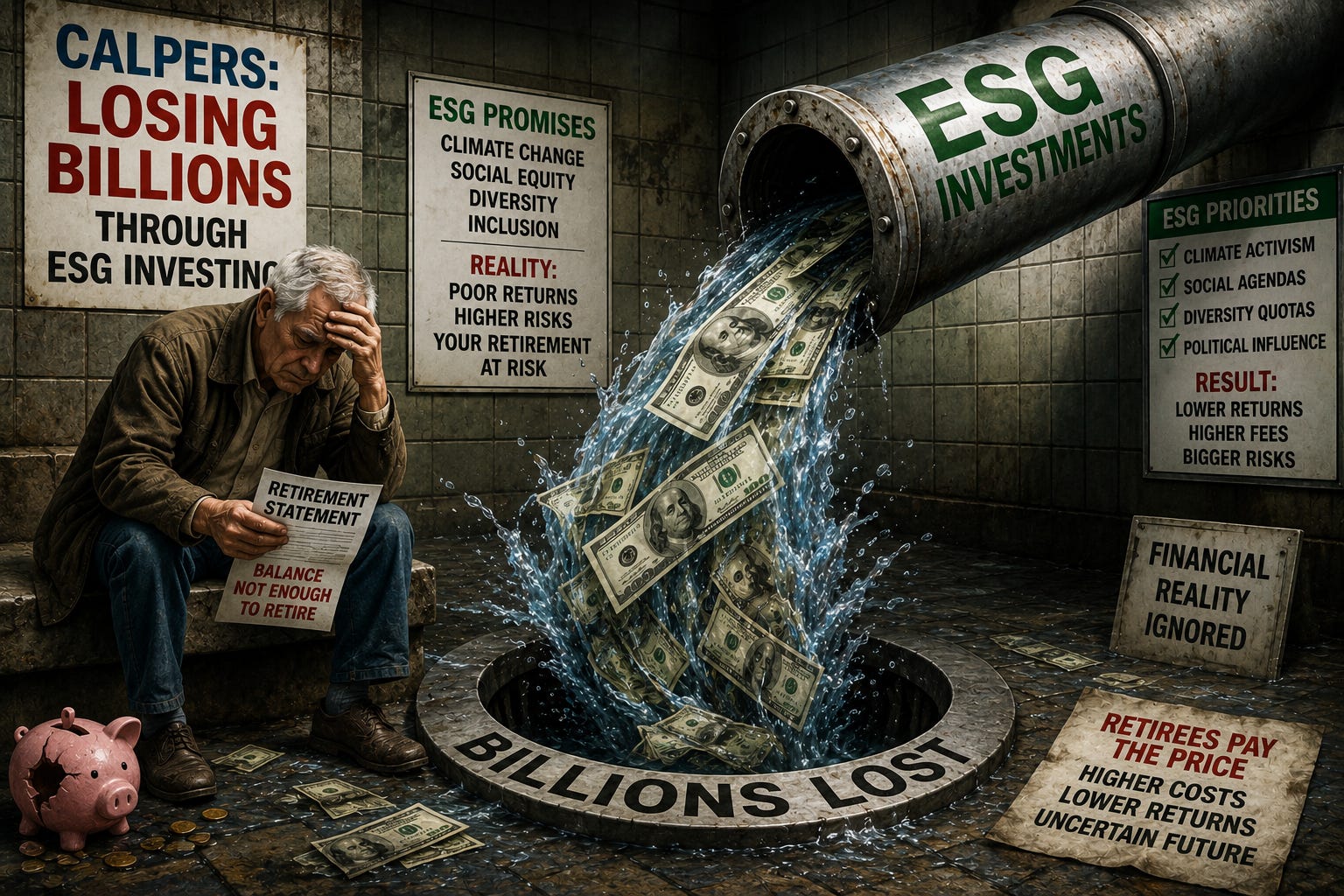
In recent years, Environmental, Social and Governance (ESG) investment strategies have continued to gain popularity among investors and financial institutions, including public pensions. However, with their rising prominence has come a growing divide in state attitudes about the ESG approach. In 2024 alone, more than two dozen ESG bills were introduced—some favorable to ESG but most oppositional—and six so far are now law.
ESG investment strategies have traditionally focused on the long-term impacts of investing in industries that could be economically, environmentally, or politically undesirable. From an investment perspective, the goal has been to limit exposure to potential risks. Some state policymaker efforts around ESG have conflated this traditional use with what is known as impact investing, a strategy that aims to achieve certain social or environmental outcomes.
According to Pew, 2024 saw an evolution toward a more measured approach—on both sides of the issue—with a greater recognition that strict pro- and anti-ESG investing mandates can lead to unintended costs and administrative challenges.
Public pensions, notes Pew, tend to use ESG factors to illuminate material risks and opportunities—such as a company’s record on employee relations or compliance with environmental regulations—that should be considered as part of any financial decision-making process. That is, pensions use ESG to inform overall investment and risk management strategies. State policymakers, however, have largely viewed ESG through a “social impact” lens, which has prompted policies either prohibiting or requiring certain ESG-related investments. Not only is this view potentially out of alignment with pension systems’ fiduciary role to act in the best interest of its beneficiaries, it also risks leaving money on the table, says Pew.
Pew concludes:
Lawmakers’ and financial practitioners’ differing interpretations of ESG can lead to confusion and politicization. Recent laws governing ESG investing, whether with a favorable or unfavorable view, may intend to mitigate exposure to financial risks for pension funds and other critical state investments, but in practice, some laws are having the opposite effect. These conflicting outcomes make it even more challenging to implement ESG mandates, as evidenced by a recent ruling in Oklahoma that halted the state’s energy law. In her ruling, Judge Sheila Stinson wrote that it was very likely the law’s “stated purpose of countering a ‘political agenda’ is contrary to the retirement system’s constitutionally stated purpose” to act in the best interests of its beneficiaries.
These latest developments underscore the fact that policies restricting investment options often force officials to make immediate and unanticipated changes to investment and borrowing strategies and approaches. The resulting upfront transaction costs and administrative challenges could ultimately mean greater costs to taxpayers to meet states’ retirement obligations…
• Primacy of Governance (G) in ESG Investing
As many commentators have observed, for all the debate surrounding the use of ESG for investing, the “G” or governance is often overlooked.
In the intricate web of sustainability, where environmental concerns and social impact often claim the spotlight, one critical pillar remains steadfast in its significance: governance, the unsung hero shaping the very foundation of ESG.
Governance is the system of rules, policies and practices by which a company is managed in a responsible, ethical and transparent manner. It involves the relationship between a company’s management and its board of directors, its investors and other stakeholders, to whom it is accountable.
It therefore forms the bedrock of the ESG agenda, as it encompasses not only one-third of the ESG equation but also acts as a prerequisite for achieving all ESG goals. Behind every violation of environmental or social commitments lies a failure in corporate governance, whether it’s insufficient anti-corruption measures, flawed incentive systems, conflicting lobbying efforts, ineffective board supervision or unprepared leadership.
In essence, sustainable governance lies at the core of the ESG agenda, and overlooking it can hinder a business’s sustainability progress.
For over three decades, CalPERS has built a reputation as an activist owner publishing principles that tied governance quality to long-term corporate returns. Since 1987, CalPERS has publicly named companies to its annual Focus List (a “name-and-engage” approach) based on underperformance in share value compared with industry peers, returns on investment and corporate governance practices. Beginning in 1996, CalPERS positioned itself as an active and vocal participant in the global corporate governance dialogue. With the goal of encouraging a continual debate on best governance practices globally, in 1997 CalPERS’ Board adopted a set of “Global Governance Principles.” Later, CalPERS embraced and adopted as its own the Statement of Global Corporate Governance Principles, as adopted in July 1999 by the International Corporate Governance Network.
• Billions Lost Through ESG Investing
In 2000, in one of its most prominent “values/ESG”-adjacent actions, CalPERS voted to divest about $525 million in tobacco stocks in certain passive portfolios saying an “unprecedented amount” of litigation and regulation made the industry a bad investment. The CalPERS staff had recommended against selling the stock, saying it would cost at least $30 million.
In 2016, CalPERS voted not only to continue the divestment of tobacco from CalPERS’s internally managed equity portfolio, but to withdraw from more than $500 million in tobacco stocks managed by external managers. A 2018 report by Wilshire Associates, the pension system’s then-general investment consultant, showed that CalPERS had lost $3.581 billion in investment gains by divesting from tobacco stocks, or about 1 percent of current assets, during a 17-plus-year period ending June 30, 2018.
A 2018 report showed that CalPERS had lost $3.581 billion in investment gains by divesting from tobacco stocks, or about 1 percent of current assets, during a 17-plus-year period.
In 2013, CalPERS adopted a set of ten Investment Beliefs (widely cited as a foundational governance document guiding investment decisions) “intended to guide decision-making, facilitate the management of a complex portfolio, and enhance consistency.” These beliefs “which address sustainable investment, risk management, and CalPERS engagement with companies, regulators, managers, and stakeholders,” explicitly treated ESG factors as financially material. The Board consolidated this view into its Governance & Sustainability Principles (a living policy used to guide proxy voting and engagement).
At that time, the pension noted that it “recognize(d) that much of our experience in this area comes from investments in public equities but that our evolution to a “Total Fund” approach means these Principles may need to be suitably adapted to work across other asset classes. We continue to listen and learn in this area.”
In 2015–2016, California’s Climate Investment Framework reveals that CalPERS developed and then approved a multi-year strategy to incorporate ESG into investment operations, including reporting/standards work and carbon-footprint assessment workstreams. In 2015, CalPERS released the results of its 2015 Principles of Responsible Investment (PRI) Assessment Report indicating the pension had received an ‘A+’ for its overarching approach to responsible investment, the highest possible grade offered by UN-backed PRI.
In the 2020s, Climate has become the dominant “E” or environmental priority at CalPERS and the pension publicly committed to a $100 billon by 2030 “Climate Action Plan” (doubling down on “climate solutions” investing). In May, 2024, CalPERS laid out the Climate Action Plan structure in a legislative presentation, calling it “one of the world’s biggest commitments to climate solutions.” The plan called for a $100 billion climate-solutions target by end-2030 and a more than 50 percent reduction in portfolio emissions intensity, alongside engagement with portfolio companies and advocacy to promote decarbonization, integration of climate risks into investment decisions, and enhanced measurement and reporting of portfolio emissions.
In 2024, CalPERS laid out the Climate Action Plan structure calling it “one of the world’s biggest commitments to climate solutions.” The plan called for a $100 billion climate-solutions target by end-2030.
Recent reports indicate CalPERS “climate solution” assets reached nearly $60 billion by mid-2025, driven largely by public equities and real estate appreciation and new commitments, “marking a major milestone just two years after setting its 2030 target” of $100 billion.
The economic impact of CalPERS’ climate initiatives is indeterminate because CalPERS does not report the impact in a manner that allows the public to measure value added or value destroyed. There is no proof that CalPERS’ climate investment initiatives have added value, and there is no transparency sufficient to rule out that they have cost the pension money.
There is no proof that CalPERS’ climate investment initiatives have added value, and there is no transparency sufficient to rule out that they have cost the pension money.
From a fiduciary perspective, the burden of proof has not been met and CalPERS has structured its disclosures in a way that prevents the public from independently evaluating the economic impact.
CalPERS consistently states that Climate investing is risk management, not “values-based” investing and that the $100 billion Climate Action Plan is expected to be return-neutral or return-positive over the long term. Crucially, CalPERS does not claim outperformance, does not publish a climate benchmark and does not publish a climate attribution analysis.
CalPERS does not disclose returns for the $100 billion “climate solutions” sleeve; returns versus a non-climate control portfolio; incremental costs of climate integration (consultants, data, reporting, ESG overlays) or Climate-related opportunity costs (e.g., foregone investments)
As a result, it is impossible, from CalPERS disclosures, to verify that climate initiatives added value, which is a material governance issue by itself.
… it is impossible, from CalPERS disclosures, to verify that climate initiatives added value, which is a material governance issue by itself.
We can say with confidence that Climate initiatives increase complexity and costs, are heavily implemented through high-fee private markets, and CalPERS does not disclose enough data to prove net benefit and underperformance, if any, compounds over decades. We cannot say (because CalPERS does not disclose) whether climate investments beat a simple market portfolio, reduce long-term risk enough to justify the incremental costs and whether members are better off financially because of them.
CalPERS ESG Governance Failures
The CalPERS ESG initiatives discussed above are, in our opinion, deeply flawed in that they focus upon external popular environment and social issues but fail to address the fund’s greatest internal governance issues: a profound lack of transparency, monumental conflicts of interest and grossly misleading performance and fee disclosures to the public.
It is ironic that the only governance “ills” the pension seems unwilling to address are those within its own halls.
It is ironic that the only governance “ills” the pension seems unwilling to address are those within its own halls.
Most disturbing, improving transparency, conflicts of interest and reporting to the public would have an enormous impact upon the performance of the pension, potentially improving retirement security for participants and lowering taxpayer costs—objectives clearly consistent with the fiduciary duties of the fund’s board.
Further, there are no costs related to improving governance of the pension, indeed, better governance through transparency will actually lower costs. For example, if CalPERS required its external investment managers to be fully transparent regarding conflicts of interest and fees, fee competition would be enhanced and any excessive, bogus or illegal fees would be eliminated. Requiring external investment managers to be compliant with environment and social concerns while they operate in secrecy, i.e., ignoring transparency governance, is absurd.
Although governance risks pose challenges, it is a crucial part of ESG. Effective governance ensures compliance, transparency, and accountability while addressing environmental and social risks. It integrates ESG considerations into decision-making, drives sustainable practices and attracts responsible investment. Strong governance builds trust, enhances stakeholder confidence and enables organizations to navigate complex ESG landscapes for long-term value creation and positive societal impact.
In conclusion, under traditional prudent fiduciary ERISA-like standards (recognizing CalPERS is not ERISA-governed), the pension should be able to disclose and explain to the public, the investment return related to each and every ESG strategy, compared to an appropriate benchmark, at what cost, over each period and with what risk. Finally, as mentioned above, the pension’s longstanding general investment consultant, Wilshire, and its investment staff have in the past actually concluded that at least certain of its ESG initiatives (tobacco) have cost it billions over time.
To view Pension Fight Club documentary click here.